8 Simple Ways to Align your Money with your Values
“Wealth is the ability to fully experience life.”
Every dollar you earn, save, spend, or give is quietly expressing what matters most to you—your values, your priorities, your fears, and your hopes for the future. What’s important to you about money?
For me, this answer has changed a lot over the years. When I was a kid and saw my parents living paycheck to paycheck, it was really important to me that I got a job that “would make a LOT of money”. As a college graduate with a new salaried job but swimming in credit card debt, I can now look back and see that my primary values at the time were status and freedom. I wanted others (but mostly myself) to know that I had “made it”. If you are also someone who was the first to go to college in your family or who has crossed social classes, you may have gone through something similar.

The first time I went to New York City was a big “I made it” moment. Here, at the top of the Empire State Building back in 2007, I felt on top of the world.
So much has happened in 25 years since college graduation, and I can confidently say that I’ve matured and my values along with them. I know the same is true for most of my clients who are also in mid-life and making plans for how best to use the income & wealth they’ve built to achieve the life they want. It can be tricky because there is a good chance that there will be trade-offs along the way. (For example, it can be difficult to retire early if you are also paying for two kids to go to college.)
It can be hard to set & achieve financial goals without knowing what is truly important to you in life. Identifying your core values is the first step in this process. I’ve got a handy workbook to help with this!
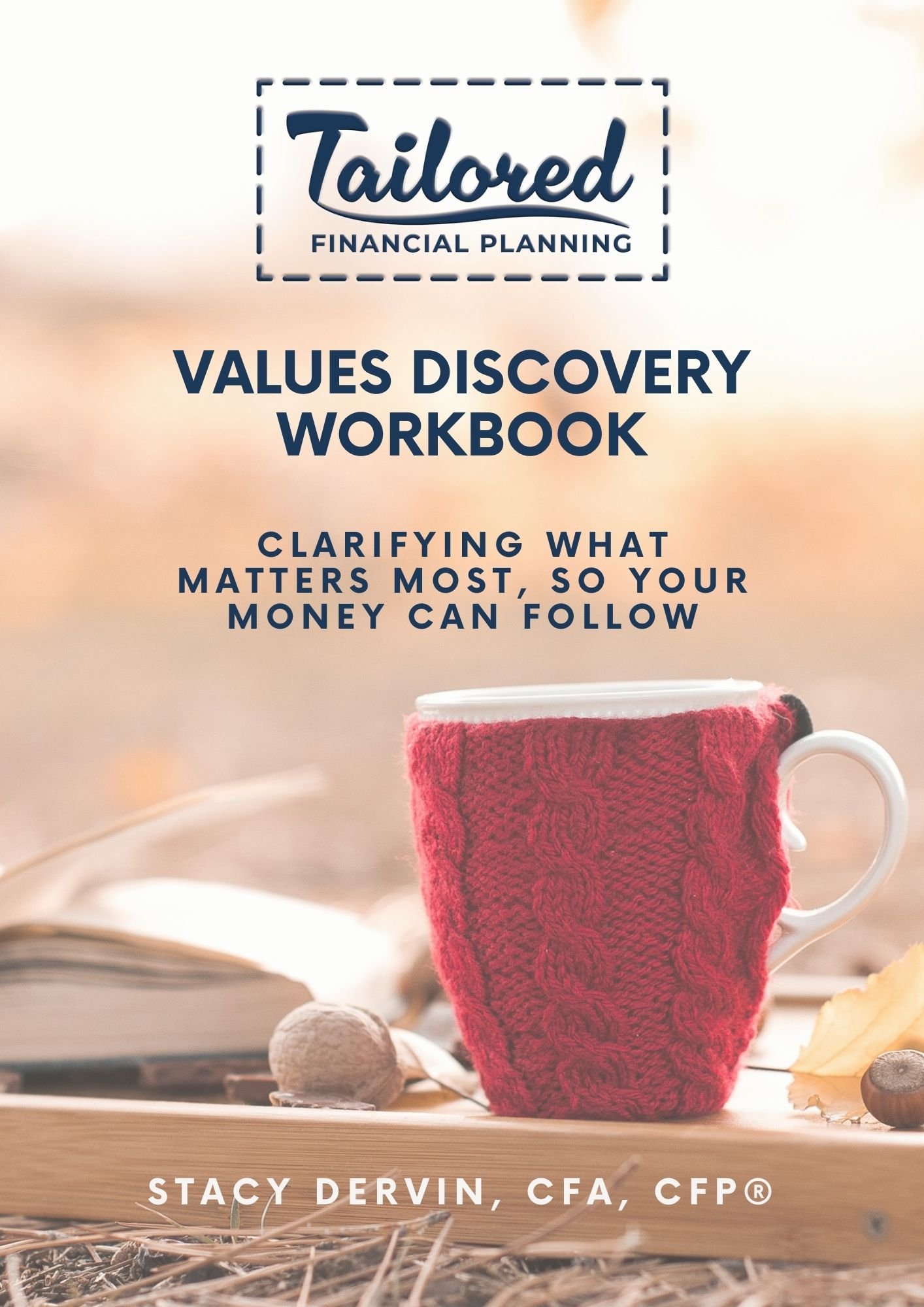
Grab your favorite beverage, find a comfy spot and dedicate 15 minutes to this exercise. Trust your gut and try to hold off on any self-judgment, because odds are most of these values are important to you. This will help identify what matters most.
Great. I’ve got my values. Now what?
Take some time to reflect on how you actually use your money (earning, saving, spending & giving) and try to non-judgmentally identify areas where you might want to make some changes.
Adjust your expectations about how much you’ll be able to change based on this exercise. You don’t need to overhaul everything overnight. Small, values-based shifts, done consistently, are far more powerful than dramatic changes driven by guilt or fear.
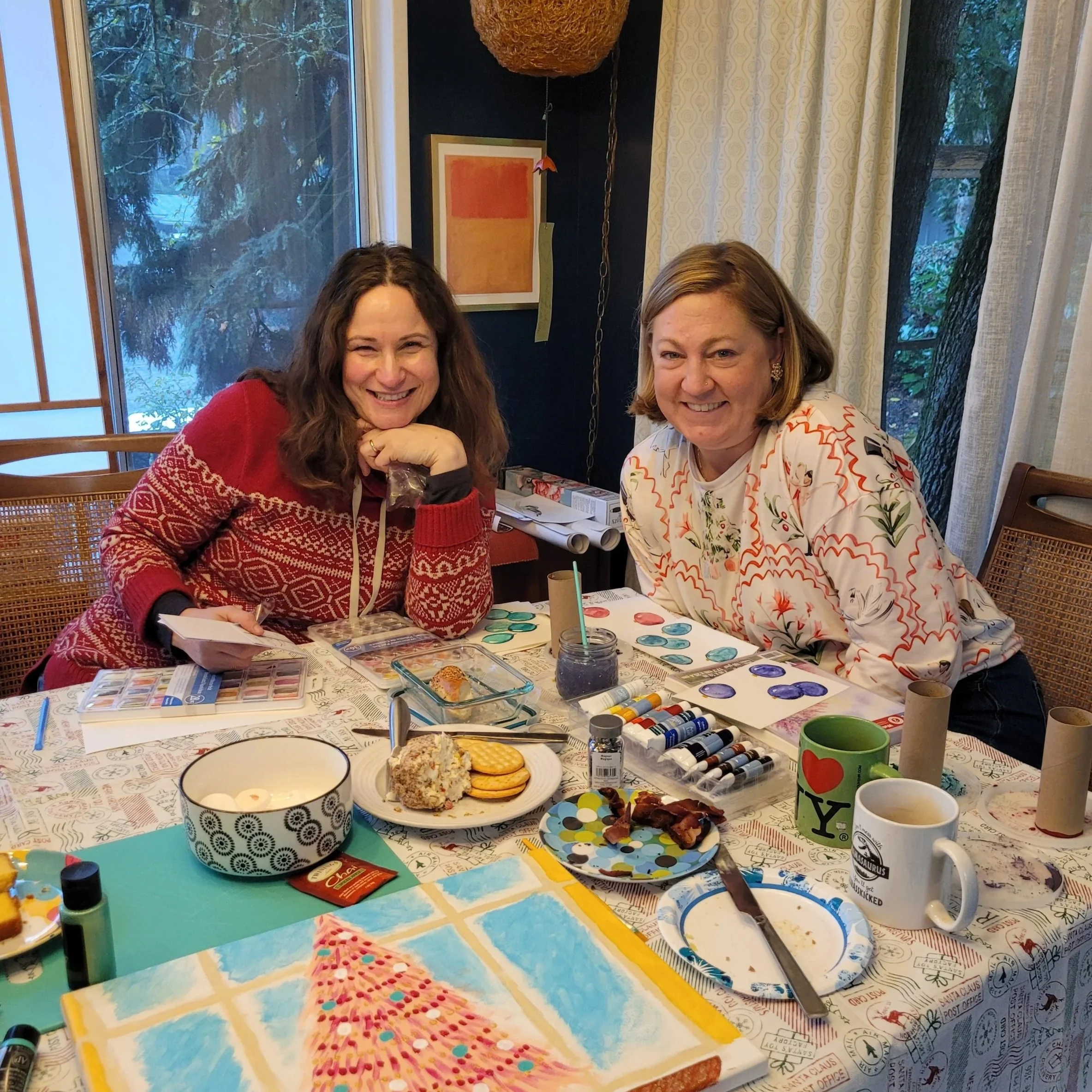
For example, one of my core values is creativity. I love to buy new arts & crafts supplies, but I don’t often use them. I’m more of a collector at this point than someone who is creative, haha. Part of the issue is that when I have free time, I often want to spend it with friends.
So instead of hitting the craft store for more materials to build my artistic arsenal, I’ve decided that I will instead plan to have friends over to use up materials I already have at home. (Pic at right: paint night with friends at home=free!)
More ideas for how to align your money with your values
Regularly review your spending to make sure your purchases are consistent. For example, are small purchases on less-important stuff eating away from your ability to spend on something bigger that REALLY matters? (My clients and I use Monarch Money to regularly review our everyday spending).
Review your big annual purchases like travel. Could you give up some weekend trips (that often really add up) in order to take a week-long (or longer!) trip to a bucket-list destination?

Consider the value of your time and some of the intangibles that come with certain purchases. For example, at first blush, eating out can seem frivolous. My family sometimes enjoys a pricey night out together at Korean BBQ, but look closer and you can find time spent together as a family, convenience of not having to plan, shop, cook & clean-up after a home-cooked meal and the benefits of trying new foods and experiencing different cultures. K-pop videos on TVs all around— yes, please! (Pic: My husband Ted and son Felix at our favorite Korean BBQ place.)
Be choosy WHERE & with WHOM you spend your money. Shopping with small, local businesses might be more in alignment with your values than heading to Amazon.com. When you give your dollar to a large corporation, you are implicitly participating in how they make business decisions like how much they pay their employees & CEO, where they source supplies & where they reinvest their capital.
Consider ways to save money in categories that are less important to you. For example, if you value experiences more than things, be sure to check out thrift stores for goods like clothes & furnishings. I like to thrift shop online at places like ThredUp because I can search for my favorite brands easily.
If you pay tax dollars (chances are you do), let your legislators know whether you approve of how they are spending your tax dollars. Use an app like “Five Calls” to know exactly who to call in your area and access free scripts for what to say.
Don’t forget your investment portfolio. One of my clients once asked me to help build her a “Tesla-free” stock portfolio and with one very small change, we got it done. You can also invest with a bias towards investing with companies that prioritize Environmental, Social & Governance factors in their business decisions.
If you like to give to charity, review where your donations went last year. Are there some organizations that resonate more with your values than others? If so, consider prioritizing their organization with one larger gift to make even more impact.
Stacy Dervin, CFA, CFP® provides fee-only financial planning and investment management services in Eugene, Oregon. Tailored Financial Planning (TFP) serves clients as a fiduciary and never earns a commission of any kind. As a financial advisor, Stacy is on a mission to help Gen X and Gen Y be truly proactive about their financial futures.
Full Disclosure: Nothing on this website should ever be considered to be advice, research or an invitation to buy or sell any securities. Please see the Disclaimer page for a full disclaimer.