
This year, my family contributed to our child's Oregon College Savings Plan and got $360 back from the State of Oregon as a refundable tax credit. No strings attached. Just money back in our pocket for doing something we were already planning to do.
If you haven't opened a 529 for your child yet, I want to address the #1 reason most families hesitate: "What if my kid doesn't go to college?"
That fear is now outdated.
529s Are More Flexible Than Ever
Thanks to recent legislation, the SECURE 2.0 Act and the One Big Beautiful Bill Act (OBBBA) signed in 2025, 529 plans have been dramatically expanded:
K-12 expenses: You can now withdraw up to $20,000 per year (up from $10,000) tax-free for K-12 costs, including tuition, tutoring, curriculum materials, and test prep fees.
Trade schools and certifications: Funds can now be used for vocational programs, apprenticeships, and professional licensing exams (think nursing, CPA, and more).
Unused funds into a Roth IRA: If your child doesn't use it all, up to $35,000 can roll tax-free into their Roth IRA over time, a powerful head start on retirement. One big requirement: the account needs to be open for at least 15 years, so start early!
Scholarship? You can withdraw up to the scholarship amount penalty-free.
Younger Siblings? or Maybe you plan to go back to school? Change the beneficiary to another family member to use up any leftover funds.

The bottom line: money in a 529 is never truly "stuck." (And worst, worst case scenario, you may pay a 10% penalty on only the earnings portion. The principal (contribution) is never taxed or penalized, as it was made with after-tax dollars.)
The Oregon Advantage
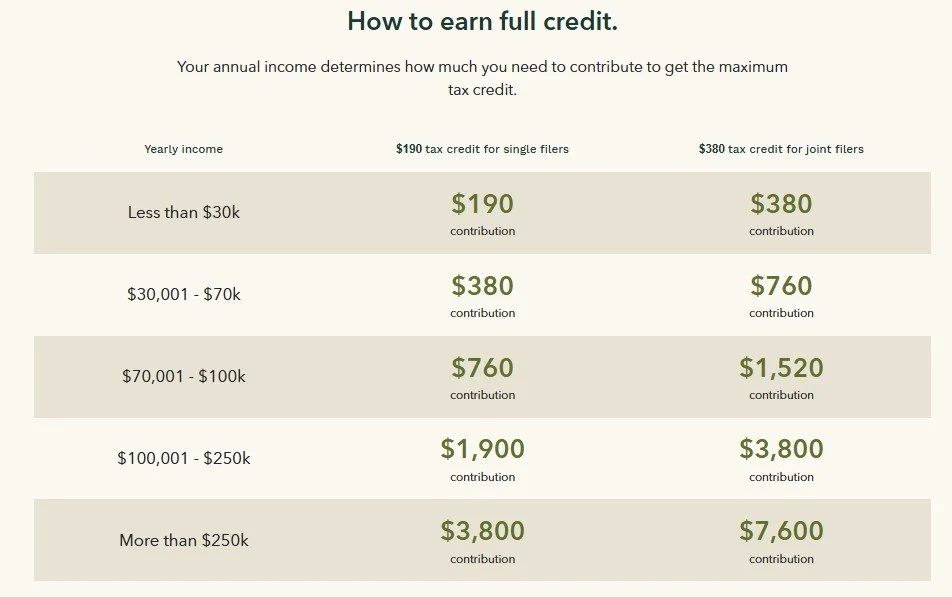
Oregon's plan, now called Embark, offers something most states don't: a refundable state tax credit. That means even if you owe no Oregon state taxes, you can still receive:
Up to $190 per year (single filers)
Up to $380 per year (married filing jointly)
You can make contributions up until your tax filing deadline and still claim the credit for that tax year.
It's one of the easiest wins in personal finance, and if you think about it, an instant return-on-investment from 10% up to 100%. Just make sure that you are making the correct minimum contribution based on your income level for that year. (See below)
A Note for Grandparents: This One's For You Too
For years, grandparents were warned away from using their 529 to directly pay for a grandchild's college: under the old FAFSA rules, those distributions counted as student income and could reduce financial aid eligibility by up to 50 cents on the dollar.
That warning is now history.
Under the simplified FAFSA, grandparent-owned 529 plans are no longer reported as assets, and distributions are no longer counted as student income — meaning grandparents can contribute and spend freely without touching their grandchild's financial aid eligibility.
It's one of the best-kept secrets in education planning.

One caveat: some private colleges still use the CSS Profile for institutional aid, which may still consider grandparent contributions — so if an Ivy League school is on the list, check that school's specific policy first.
The Best Time to Start Is Now
Research shows that children with a college savings account in their name are 3x more likely to enroll in college or job training — and 4x more likely to complete it. The account itself changes expectations.
You can open an Embark account at embarksavings.com with as little as $25. That's it. The site walks you through how to set up your investment allocations based on the age of your child.

If you'd like to talk through how a 529 fits into your family's overall financial plan, I'd love to help. Feel free to book a free, 30-minute consultation with me over at www.tailoredfp.com.
Stacy Dervin, CFA, CFP® provides fee-only financial planning and investment management services in Eugene, Oregon. Tailored Financial Planning (TFP) serves clients as a fiduciary and never earns a commission of any kind. As a financial advisor, Stacy is on a mission to help Gen X and Gen Y be truly proactive about their financial futures.
This post is for informational purposes only and does not constitute tax or legal advice, research or an invitation to buy or sell any securities. Please consult a qualified tax professional regarding your specific situation and see our full disclaimer here.